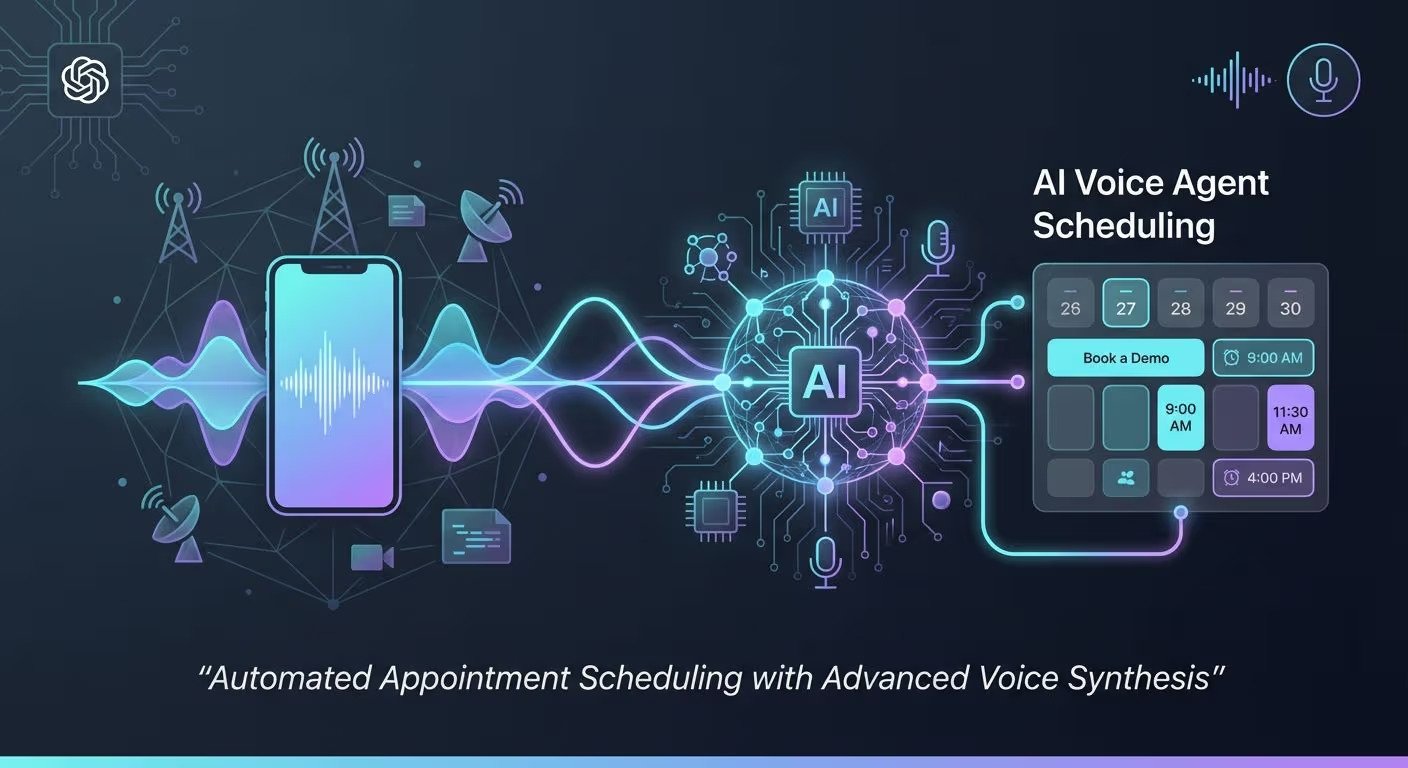
Small businesses lose an average of 27% of potential appointments due to missed calls and booking delays, yet most still rely on manual phone scheduling that ties up staff for 3-4 hours daily.
AI voice agent appointment booking software eliminates these bottlenecks, but successful implementation requires a strategic approach that transforms your entire booking workflow. Here's your complete 90-day roadmap to measurable ROI.
Assessing Your Current Manual Booking Challenges
Before implementing automated appointment scheduling, document your baseline performance over two weeks. Track these metrics: average call answer time, percentage of calls answered during business hours, booking completion rate, and staff hours spent on scheduling tasks.
Most businesses discover they're answering only 65-70% of appointment calls during peak hours. Document when calls go unanswered – typically lunch hours, early mornings, and late afternoons. Note how many potential customers hang up before reaching a human, as this represents immediate lost revenue.
Calculate your current cost per appointment booked. Include staff wages, phone system costs, and overhead. A dental office scheduling 200 appointments monthly typically spends $1,200-1,500 in direct labor costs alone.
Planning Your AI Voice Agent Implementation Strategy
Week 1-2 involves selecting your
voice AI for small business solution and mapping integration points. Start with your existing calendar system – whether Google Calendar, Outlook, or specialized booking software. Modern AI appointment booking services integrate with over 40 popular scheduling platforms, but custom integrations may require 2-3 weeks.
Plan your call flow scenarios. Document how your staff currently handles appointment types, cancellations, and reschedules. Your phone booking automation system needs scripts for peak appointment types – typically 80% of bookings fall into 3-4 categories. For a medical practice: routine checkups, follow-ups, new patient consultations, and urgent appointments.
Set realistic go-live expectations. Most businesses see smooth operation within 3-4 weeks, not immediately. Plan for a soft launch with your
AI receptionist appointment setting handling 30-40% of calls initially, scaling to 80% by day 30.
Integration Planning Checklist
- Calendar system API access and permissions
- Staff schedule access and real-time availability
- Patient/customer database integration for returning clients
- Payment processing for deposits or full payments
- SMS and email confirmation workflows
- Backup procedures when systems go offline
Staff Training and Change Management Best Practices
Address resistance immediately by involving staff in solution selection and testing. Schedule hands-on training sessions where team members interact with the voice assistant appointment management system as customers would. This builds confidence and identifies improvement opportunities.
Train staff on monitoring dashboards and override procedures. Your team should know how to pause the AI system, transfer complex calls, and handle escalations. Most successful implementations designate one staff member as the "AI champion" responsible for ongoing optimization.
Create clear protocols for AI-human handoffs. The automated phone scheduling system should seamlessly transfer calls requiring human intervention – typically 10-15% of interactions. Staff need specific scripts for these transfers to maintain professional service quality.
Common Staff Concerns and Solutions
- Job security fears: Position AI as handling routine tasks so staff can focus on patient care and complex scheduling
- Technology comfort: Provide simple override controls and clear escalation procedures
- Customer preference: Offer easy options to speak with humans while highlighting AI convenience
Key Performance Indicators to Track Success
Monitor these specific metrics weekly during your first 90 days:
Response Time Metrics: Average time to answer calls should drop from 45-60 seconds to under 10 seconds. Voice bots answer immediately, eliminating hold times during peak periods.
Booking Completion Rates: Track appointments scheduled per 100 calls. Manual systems typically convert 40-60% of scheduling calls. Well-configured AI systems achieve 75-85% completion rates by eliminating abandoned calls due to long wait times.
Customer Satisfaction Scores: Survey customers about booking experience weekly. Focus on ease of scheduling, accuracy of appointment details, and preference for voice versus human interaction. Most businesses see satisfaction scores improve 15-20% within 60 days.
Staff Productivity Measures: Document time staff previously spent on phone scheduling. Track how this time gets reallocated to patient care, sales activities, or other revenue-generating tasks.
Measuring ROI and Business Impact in 90 Days
Calculate hard savings first. A typical small business reduces scheduling labor costs by $800-1,200 monthly while increasing appointment bookings by 25-35%. For a practice scheduling 300 appointments monthly at $150 average value, a 30% increase generates $13,500 additional monthly revenue.
Direct Cost Savings:
- Reduced staff overtime for after-hours booking calls
- Eliminated missed appointments due to scheduling errors
- Decreased no-shows through automated confirmations and reminders
- Lower phone system costs from shorter average call times
Revenue Impact: Track appointment volume, average booking value, and customer retention rates. Most businesses see 15-25% increased bookings within 60 days simply by answering more calls and providing 24/7 scheduling availability.
Calculate your payback period by dividing implementation costs by monthly savings. AI voice agent appointment booking software typically costs $200-600 monthly, while generating $2,000-4,000 in combined savings and additional revenue.
Real-World Case Studies and Success Stories
Dental Practice Case Study: A three-dentist practice reduced appointment scheduling labor from 20 hours weekly to 4 hours while increasing bookings 40%. Their automated appointment scheduling system handles routine appointments, allowing staff to focus on treatment planning and patient care. ROI achieved in 45 days.
Home Services Business: A plumbing company implemented voice AI for small business operations, extending booking hours to 6 AM - 10 PM daily. Emergency calls get immediate scheduling, while routine maintenance appointments book automatically. Monthly service calls increased 35% with same staffing levels.
Medical Clinic Success: A family practice solved missed call problems during lunch breaks and shift changes. Their AI appointment booking service now handles 70% of scheduling calls, reducing patient wait times and improving satisfaction scores by 22%.
Common Implementation Challenges and Solutions
Voice Recognition Issues: Accents, background noise, and unclear speech affect 5-8% of calls initially. Modern systems learn from corrections and improve accuracy within 30 days. Always provide easy transfer options for frustrated callers.
Complex Scheduling Needs: Multi-provider practices with varying schedules require careful calendar integration. Plan 2-3 weeks for complex availability logic setup.
Customer Adaptation: Elderly or tech-averse customers may prefer human interaction initially. Maintain staffed hours while promoting AI convenience for routine bookings.
Smart implementation of AI voice agent appointment booking software delivers measurable ROI within 90 days through increased bookings, reduced labor costs, and improved customer satisfaction. Success depends on thorough planning, staff buy-in, and consistent monitoring of key performance indicators that directly impact your bottom line.